Repair or new install, anywhere in Montgomery County. Pump won't kick on, running non-stop, or dead before a storm? You reach the Holdsy Plumbing team directly, not a call center. They diagnose the real fault before quoting anything.
We'll follow up within one business day. No pressure, no upsells.
A Dead Sump Pump Before a Storm Is a Same-Day Call
Sump pump repair across Maryland usually starts the same way: the pump is either not turning on, running without stopping, or you just noticed it's dead and there's rain in the forecast. Either way you reach the Holdsy Plumbing team directly at (301) 834-2944, covering Gaithersburg, Rockville, Germantown, and the rest of Montgomery County for both repair and new installation. Chase tests the actual failure point first: a stuck float switch is one fix, a seized motor is another, and a check valve that lets water fall back into the pit fakes a pump that never rests. Owner-operated means the person who answers the phone is the person who pulls the pump and diagnoses it, with no commission riding on selling you a new unit when a $20 float fixes it.
Here's the part that's specific to where you live. Basements across Gaithersburg, Rockville, and Germantown sit on the dense clay soil common to this part of Montgomery County, and that clay holds water against the foundation for days after a heavy rain instead of draining it away. In the older 1960s through 1980s housing stock around here, that means a sump pump isn't a nice-to-have, it's the one thing standing between a functional basement and a flooded one. It's worth saying plainly that this has nothing to do with a well pump, which is a different system entirely: that one brings drinking water up into the house, while a sump pump pushes groundwater back out of the basement. A pump that limps through a dry stretch will fail under the sustained inflow of a real storm, which is exactly the moment it can't fail.
Reading the symptom
Why Is My Sump Pump Not Working?
Details below
A sump pump quits in a handful of predictable ways, and the symptom usually points at the cause. The grid below covers what Chase checks first when a pump stops keeping up. If more than one of these is happening at once, the unit is further gone than a single fault suggests.
Runs constantly and won't shut off
A pump that never rests is usually a float switch stuck in the on position, or a failed check valve letting the water it just pumped fall right back into the pit. Both are repairs, not replacements. Left alone, constant running burns out the motor early, so it's worth catching before the pump cooks itself.
Hums but doesn't move water
If the motor hums but the pit stays full, the impeller is jammed with debris or the motor is seized. Sometimes it's a clog you can clear. On an older pump that's run hard through this area's wet springs, a seized motor usually means the unit is done and replacement is the honest answer.
Dead silent, nothing happens
No sound at all points to power: a tripped breaker, a GFCI outlet that popped, or an unplugged pump (they get bumped loose more than you'd think). If power checks out and it's still dead, the motor has failed. Check the breaker and the outlet before you assume the worst.
Sump pumps detail in a Maryland home
Sump Pump Float Switch Repair
The float switch is the single most common point of failure on a sump pump, and it's usually the cheapest to fix. The float rides on the water level and triggers the pump when the pit fills, then shuts it off as the water drops. When it fails, it fails one of two ways: stuck up, so the pump runs non-stop and burns out, or stuck down, so the pump never kicks on and the pit overflows. A tethered float can also snag on the pit wall or the discharge pipe and hang in the wrong position, which mimics a dead pump when the pump itself is fine.
Chase pulls the pump, tests the switch by hand, and checks whether the float is fouled, waterlogged, or genuinely failed. On many units the switch is a replaceable part, so you're not buying a new pump to fix a bad switch. If the float's fine and the fault is upstream in the motor, he'll show you that instead, the same diagnosis-before-replacement approach he brings to every call. Pump acting up and you're not sure it's the float? Call (301) 834-2944 and describe what it's doing.
Sump pumps detail in a Maryland home
Check Valve and Pit Diagnostics
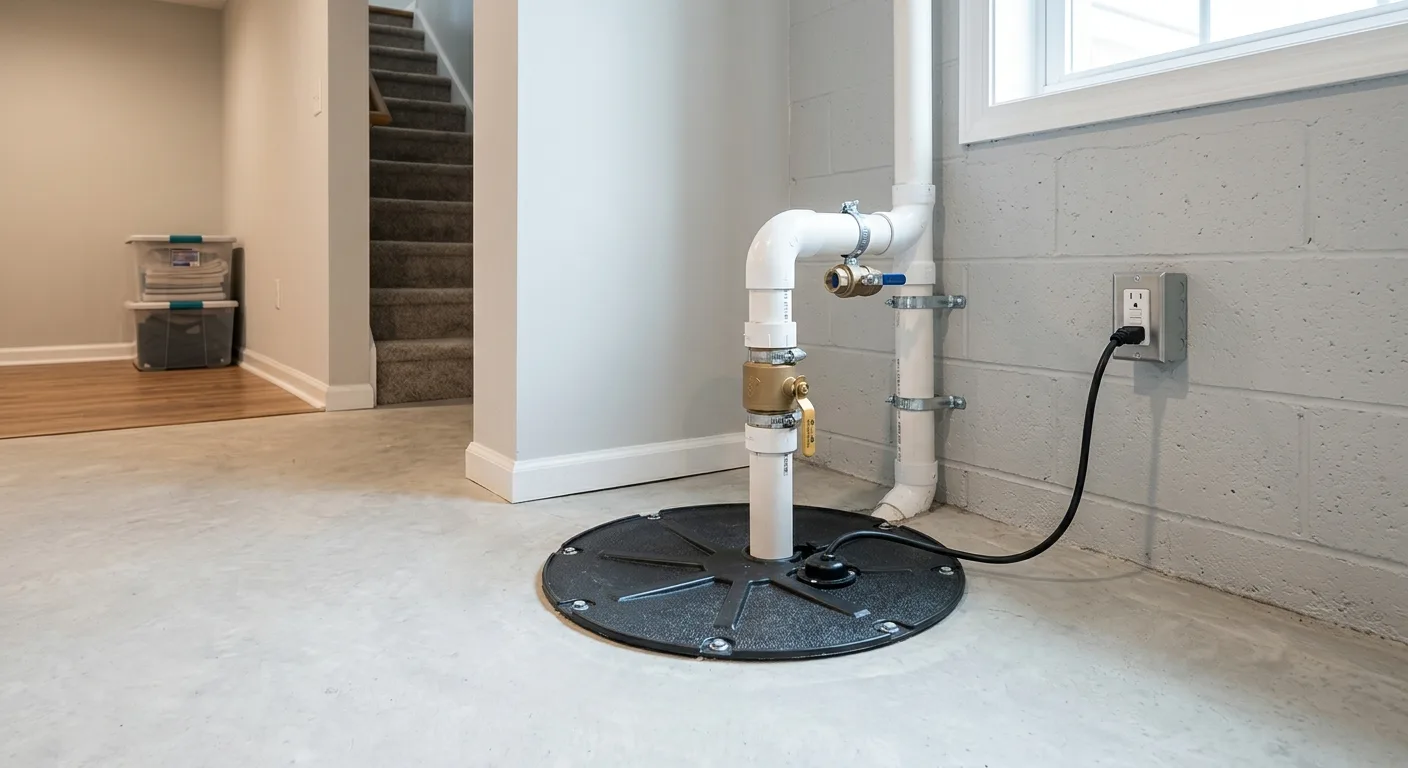
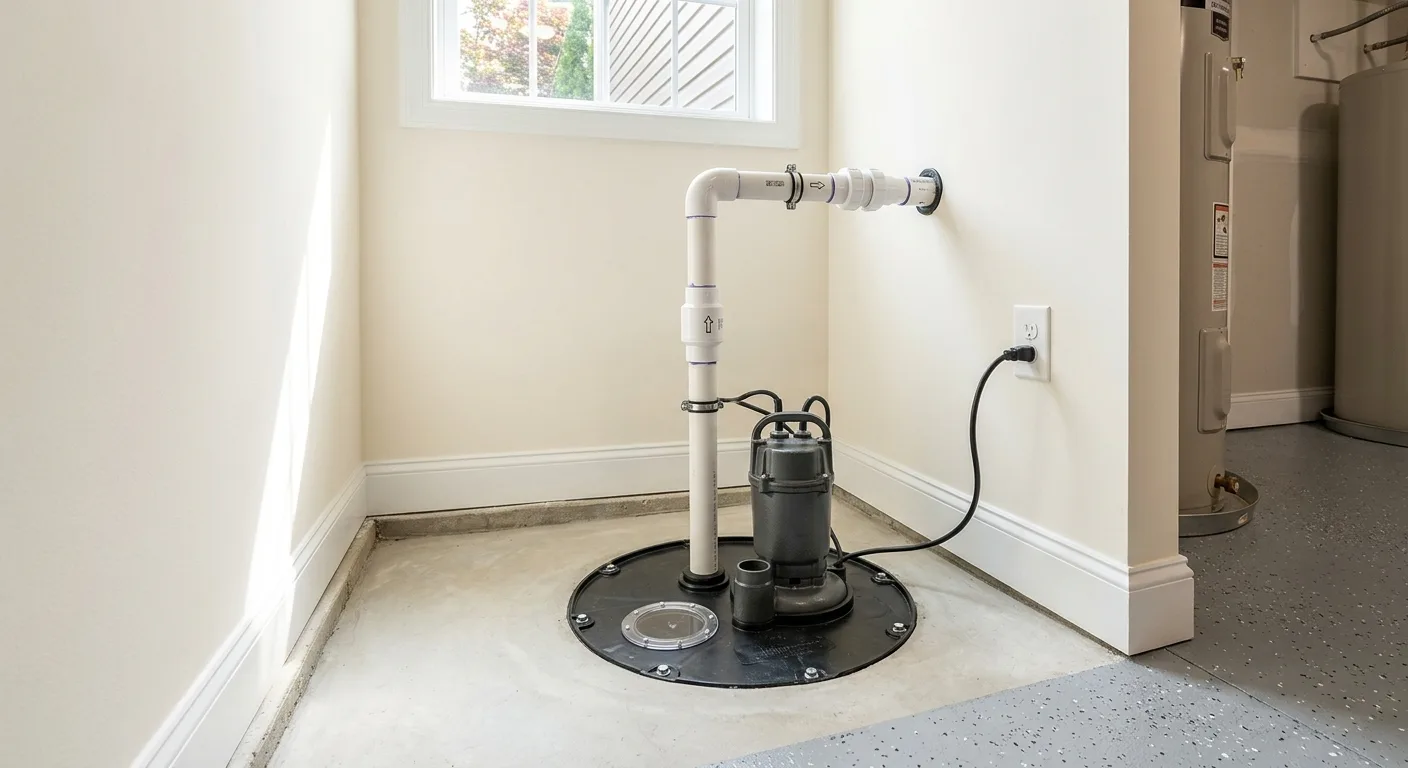
The check valve is the small, cheap part that causes an outsized share of sump pump problems, and a bad or badly fitted one does real damage before anyone notices. It sits on the discharge line above the pump and holds the water column so it can't drop back into the pit every time the pump shuts off. When it fails, or when it was never fitted right in the first place, pumped water falls straight back down, the pit refills, and the pump cycles again and again on the same water until the motor burns out. We have been called to a Montgomery County basement that had been slowly flooding for weeks because a check valve was never properly fitted on install, and the homeowner only found it when the carpet went wet. A ten-dollar valve and a bad seating cost that family two months of hidden water.
Diagnosing a sump pump is as much about the plumbing around it as the pump itself. Chase checks the check valve seating, the discharge line for the grade and the kinks that make a pump work twice as hard, and the pit for silt that fouls the intake, before he ever decides the motor is the problem. Pump cycling over and over, or you suspect the valve? Describe it to the Holdsy Plumbing team at (301) 834-2944.
Sump pumps detail in a Maryland home
Battery Backup Sump Pump: When It's Worth It
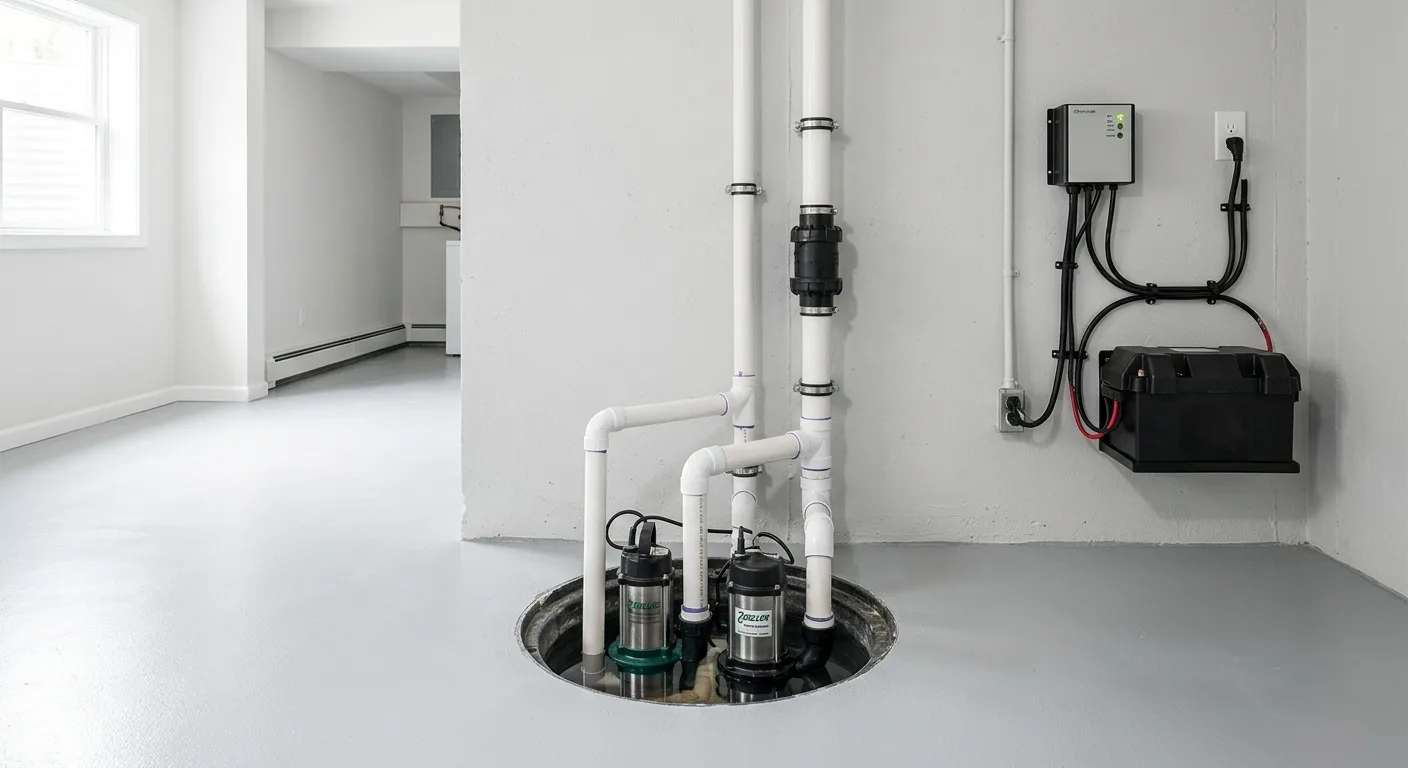
A primary sump pump has one weakness that has nothing to do with the pump: it runs on house power, and the storms that cause the worst flooding are the same storms that knock the power out. When the grid goes down mid-storm, a primary pump with no backup is just a paperweight sitting in a filling pit. A battery backup pump solves exactly that. It's a second pump mounted in the same pit with its own float set an inch or two above the primary's, wired to a battery bank so it takes over the instant the primary loses power or can't keep up with the inflow.
Who actually needs one
Not every basement does, and Chase won't pretend otherwise. If your basement is finished, holds anything you'd hate to lose, or sits low enough that this area's clay soil keeps the pit working hard every spring, a backup is cheap insurance against a five-figure flood. If it's an unfinished basement with a floor drain and nothing to ruin, you may not need one. Chase will tell you which camp you're in based on your actual basement, not a sales target. Weighing a backup for a finished basement? Request a free estimate through the contact form and he'll lay out the real cost against the risk.
Sump pumps detail in a Maryland home
Sump Pump Installation: New Pits and Replacements
Sump pump installation in Maryland splits into two very different jobs. A like-for-like replacement in an existing pit is straightforward. A brand-new installation where there's never been a pit is a bigger project, because it means working the concrete slab, excavating the pit to proper depth and diameter, setting the basin, and routing a new discharge line out and away from the foundation. An undersized pit is a common cause of premature failure, because a pump that short-cycles in a shallow pit wears out fast. Here's what a done-right install actually involves, so you know what you're paying for:
Sizing the pump to the pit and the inflow. The pump has to match how hard your basement works it. A Germantown basement on heavy clay sees more inflow than a dry lot, and the pump horsepower and pit size get matched to that, not pulled off a shelf.
Setting the pit and the basin. For a new install, the pit is excavated to proper depth and diameter so the pump has room to cycle without short-cycling itself to death. For a swap, the existing pit gets cleared of silt and checked before the new unit goes in.
Wiring the float and the switch. The float is set so the pump triggers and shuts off at the right levels, with no snagging on the pit wall or the discharge pipe.
Fitting the check valve correctly. Seated right, above the pump outlet, so the water column holds and the pump isn't re-pumping the same water. This is the step that gets skipped or botched most often.
Routing the discharge away from the foundation. Out and away, on a downward grade, terminating well clear of the house.
Testing under real water. The pit gets filled and the whole system runs live before Chase leaves, so you've seen it work, not just been told it works.
"The discharge line matters as much as the pump. I've seen installs that dump water right back at the foundation, so the pump just pumps the same water twice. It has to run out and away, on a downward grade, or you never really fixed the problem."
Where the water goes is the detail most people miss. The discharge has to carry water well clear of the foundation and terminate at a downward grade, or in this area's clay it just soaks straight back down to the pit and the pump cycles forever. Chase sets the pump for the pit, sizes it to the inflow your basement actually sees, and routes the discharge so the water leaves for good. Planning a first-time install or a swap in Montgomery County? Use the contact form for a free estimate.
Completed sump pumps in a Maryland home
When You Don't Need a New Sump Pump
A straight answer saves you money here, so here it is. If your pump has gone quiet and the pit is full, check the obvious things before you call anyone: is it still plugged in, has the breaker tripped, did the GFCI outlet pop? Pumps get bumped loose, and a reset outlet is a two-second fix, not a service call. If power's fine and the float just looks hung up on the pit wall, freeing it may get you running again.
And if your pump is only a few years old and runs fine, you don't need a replacement on a schedule, you need it tested once a year and cleaned out. Pour a bucket of water in the pit, confirm it kicks on and clears the pit, and check that the discharge is flowing away from the house. That yearly check, ideally before the spring wet season, catches a weak pump while it's still cheap to deal with. Not sure if what you've got is a quick fix or a real failure? Call Chase at (301) 834-2944 and describe it. Half the time he can tell you on the phone.
Free, no-pressure estimate
Pump Down With Rain Coming?
A dead sump pump before a storm is a same-day call, not a wait-and-see one, and it's exactly the kind of emergency we clear the schedule for. Describe it to the Holdsy Plumbing team directly at (301) 834-2944: whether it's running non-stop, dead silent, or the pit's already filling. Most of the time he can tell you on the phone whether it's urgent and when he can get there. For a planned install or backup, use the contact form to request a free estimate.
The most common causes, roughly in order: a stuck or failed float switch, a tripped breaker or popped GFCI outlet, a jammed impeller, a failed check valve, or a seized motor on an older unit. A pump that hums but moves no water usually has a jammed impeller or a dead motor. A pump that's dead silent usually has a power problem. A pump that runs non-stop usually has a stuck float or a bad check valve. Chase tests the float, the switch, and the power before condemning the motor, because a $20 float fixes far more pumps than people expect.
How much does sump pump replacement cost?+
It depends on the job. A like-for-like swap in an existing pit is the low end, because the pit and discharge line are already there. A brand-new installation that requires cutting the slab, excavating a pit, and routing a new discharge line costs more because it's genuinely more work. A battery backup system adds the second pump, the battery bank, and the wiring. Pump size, whether the existing discharge line is usable, and code updates on an older install all move the number. Chase looks at your actual basement and tells you what the unit and the labor come to before he starts, so there's no surprise once the truck is in your driveway.
Do I need a battery backup sump pump?+
If your basement is finished, stores anything valuable, or floods hard every spring, a backup is worth it, because the storms that overwhelm a basement are the same ones that cut the power your primary pump runs on. When the grid drops mid-storm, a primary with no backup just sits there. If your basement is unfinished with a floor drain and nothing to ruin, you may not need one. Chase will tell you honestly which situation you're in rather than selling a backup to every customer.
How often should a sump pump be tested?+
Test it at least once a year, ideally in late winter before the spring wet season hits. Pour a bucket of water into the pit and confirm the pump kicks on, clears the pit, and shuts off, and check that the discharge is running well away from the foundation. Clear any debris from the pit while you're at it. Most sump pumps last around 7 to 10 years, and in this area's clay soil, where pumps run hard through wet springs, they can wear out toward the shorter end of that range. A yearly test catches a weakening pump before it fails at the worst possible time.
What does a sump pump check valve do, and why does it matter?+
The check valve sits on the discharge line above the pump and holds the water column so it can't fall back into the pit each time the pump shuts off. When it fails or was never fitted properly, the water the pump just pushed out drops right back down, the pit refills, and the pump cycles on the same water until the motor burns out. A badly fitted check valve can let a basement flood slowly for weeks before anyone notices the damp. It's a cheap part, but seating it correctly on install is what makes the difference, so Chase checks the valve as part of any sump pump diagnosis before touching the motor.
My sump pump runs constantly. Is that bad?+
Yes, and it's worth fixing quickly. Constant running usually means the float switch is stuck in the on position or the check valve has failed and is letting pumped water fall right back into the pit, so the pump keeps re-pumping the same water. Both wear the motor out early. Occasionally it's a genuine high water table after heavy rain, in which case the pump is doing its job. Chase can tell the difference by checking the float and the check valve. If it's a stuck float or a bad valve, that's a repair, not a new pump.