Plumber for Low Water Pressure in Montgomery County
Whole-house or one fixture, city water or a private well. We find the actual cause before quoting a fix, so you're not paying to replace a part that was working fine.
We'll follow up within one business day. No pressure, no upsells.
Low Water Pressure, Diagnosed by Cause Instead of Guessed At
If you need a plumber for low water pressure in Montgomery County, your shower has gone weak, the washer takes forever to fill, or the whole house lost pressure overnight, and you reach the Holdsy Plumbing team directly at (301) 834-2944. Low pressure has maybe six real causes and they don't share a fix, so the whole job is telling them apart: a failing pressure reducing valve, a waterlogged well tank, a half-closed shutoff left over from other work, decades of scale inside old galvanized pipe, or a supply issue out on the WSSC main. Owner-operated means Chase runs a gauge on the line and isolates the cause before anyone quotes you a part. You'll know what it is and what it costs before we pick up a wrench.
Here's what most companies skip on a pressure call. The single most common mistake is replacing the visible part, a valve, a fixture, a section of pipe, without first proving that part is the problem. Pressure is a system, and a reading of 40 PSI at a hose bib next to the meter versus 20 PSI at an upstairs bathroom tells you two completely different stories. One points at the street or the PRV; the other points at a restriction inside the house. We take the reading first.
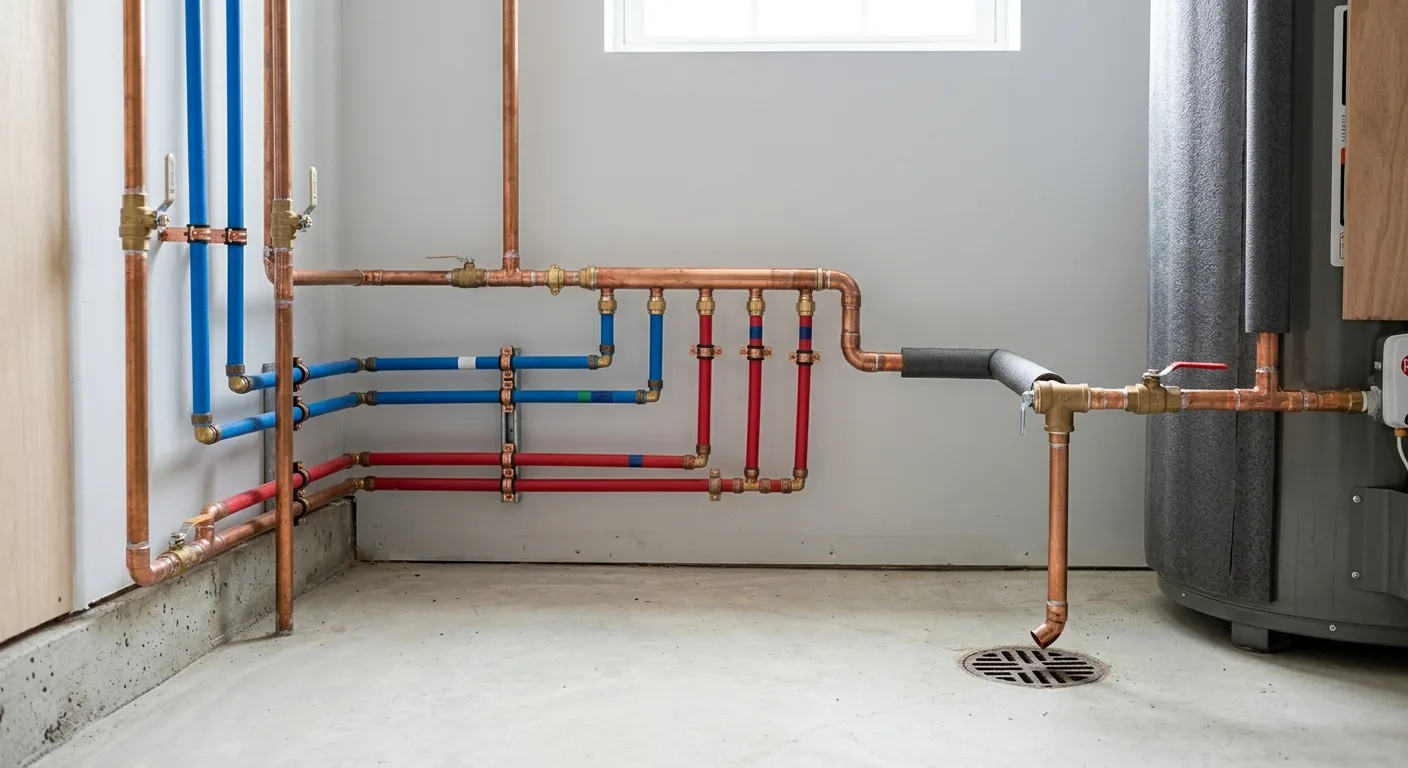
Plumber checking water supply line pressure in a Montgomery County home
Low Water Pressure in the House: How We Read It
Low water pressure in a house is a symptom, and the first job is deciding whether the whole house is low or just one fixture, because that split rules out half the causes immediately. A normal residential supply runs roughly 40 to 60 PSI. We put a gauge on an outdoor hose bib near the meter to see what the street is actually delivering, then compare that to pressure at the far end of the house. If the reading at the meter is healthy but drops off upstairs or at the kitchen, the restriction is inside your plumbing. If it's low right at the meter, the cause is your PRV or the WSSC supply.
That one measurement saves you money, because it stops the job from becoming a parts-swapping guessing game. Not sure where to even put a gauge? Describe what you're seeing at (301) 834-2944 and we'll tell you whether it's a call-now problem or something that can wait for a scheduled visit.
The real causes
What Actually Drops Your Water Pressure
Details below
Nearly every low-pressure call in a Montgomery County home traces back to one of these. We isolate which one before quoting anything, because the fix and the cost are different for every single one.
A failing pressure reducing valve
If your house is on WSSC water, it almost certainly has a PRV where the supply enters, and that valve fails as it ages, usually low but sometimes it lets pressure spike. A failing PRV is a common whole-house cause and a moderate, contained repair. We test it before condemning it, because a stuck PRV mimics a dozen other problems.
A waterlogged well pressure tank
On the private wells common west of the county near Damascus, Clarksburg, and Poolesville, weak or surging pressure usually means the pressure tank has waterlogged or the switch is off spec, not the pump. That's a cheaper fix than a pump and it's more likely. See well pump and pressure tank repair.
A partially closed shutoff valve
The most overlooked cause, and the cheapest. A main or fixture shutoff left half-open after a water heater swap, a remodel, or a meter change chokes flow to part or all of the house. We check every valve in the line before touching anything expensive. Sometimes the whole fix is a quarter-turn.
Corroded galvanized supply pipe
Homes built in the 1970s through the 1990s across Gaithersburg, Rockville, and Germantown often have galvanized steel supply lines that scale shut from the inside over decades. Pressure at the meter reads fine, but flow at the tap is choked. This is when repiping is the honest answer, not another valve.
A hidden leak bleeding off pressure
A supply leak behind a wall, under a slab, or underground steals pressure before it reaches your fixtures, and it often shows up as a jumped water bill first. We locate it without tearing the house apart. See leak detection.
A WSSC main or supply issue
Sometimes the pressure loss is on the street side, a main break, hydrant flushing, or work on the WSSC line. When the gauge at the meter reads low and nothing in the house explains it, we help you confirm whether it's a utility problem before you pay for a repair that was never yours to make.
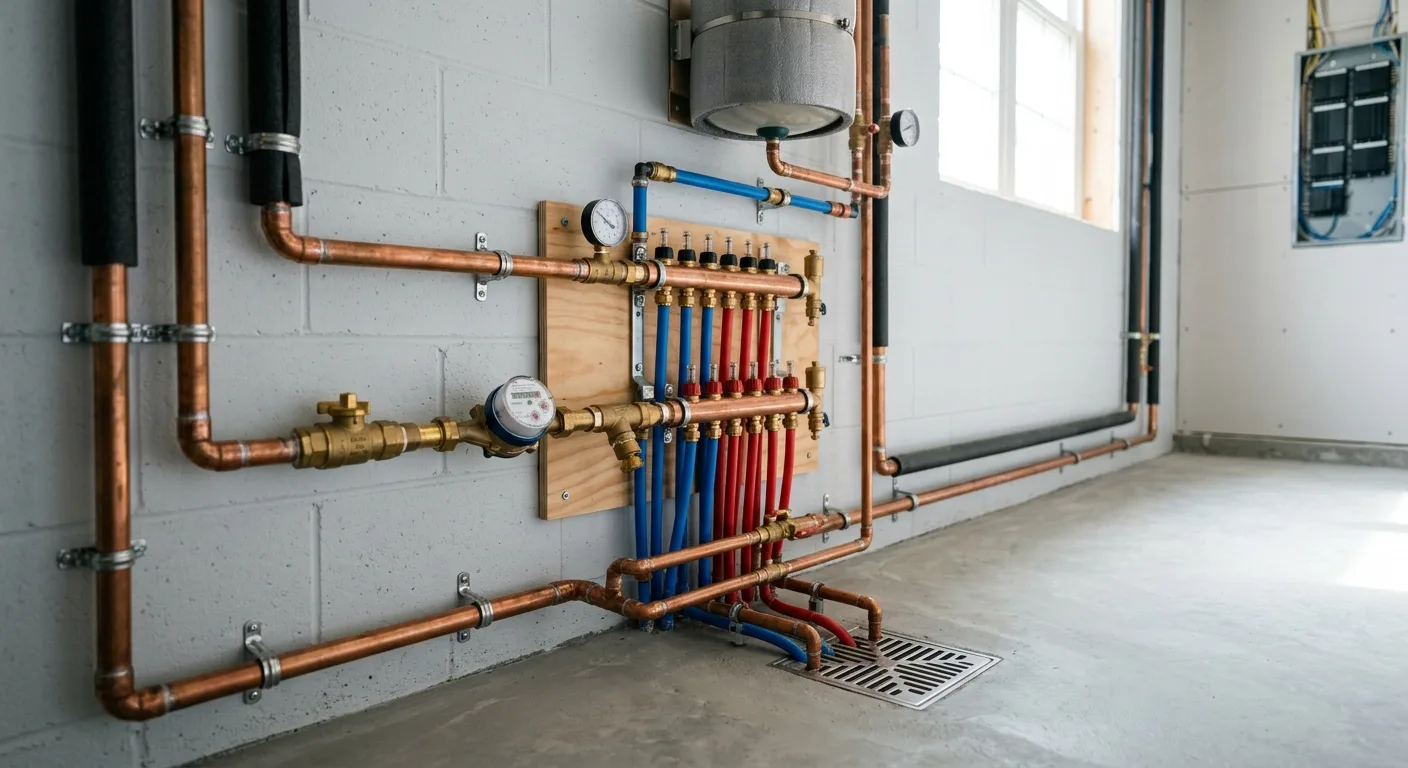
Plumber checking water supply line pressure in a Montgomery County home
Water Pressure Dropped Across the Whole House: Start Here
When water pressure dropped whole house and it happened suddenly, the cause is usually one of three things, and you can narrow it down before we even arrive. A gradual whole-house decline over months points at a scaling PRV or corroding pipe. A sudden overnight drop points at a PRV that finally gave out, a shutoff that got bumped, or a supply issue on the street.
"A sudden whole-house pressure drop is the PRV, a shutoff, or the street. A slow one over months is scale in the pipe or a tired PRV. Knowing which you have tells us where to look first."
Check two things before you call. First, is the main shutoff, usually where the water enters the house or at the meter, fully open? A valve nudged during other work is the number-one false alarm. Second, is it truly whole-house, or is it worst at the fixtures farthest from the meter? If the far fixtures are the weakest, you likely have a restriction building inside the pipe rather than a supply problem. Call (301) 834-2944 and we'll walk the rest with you.
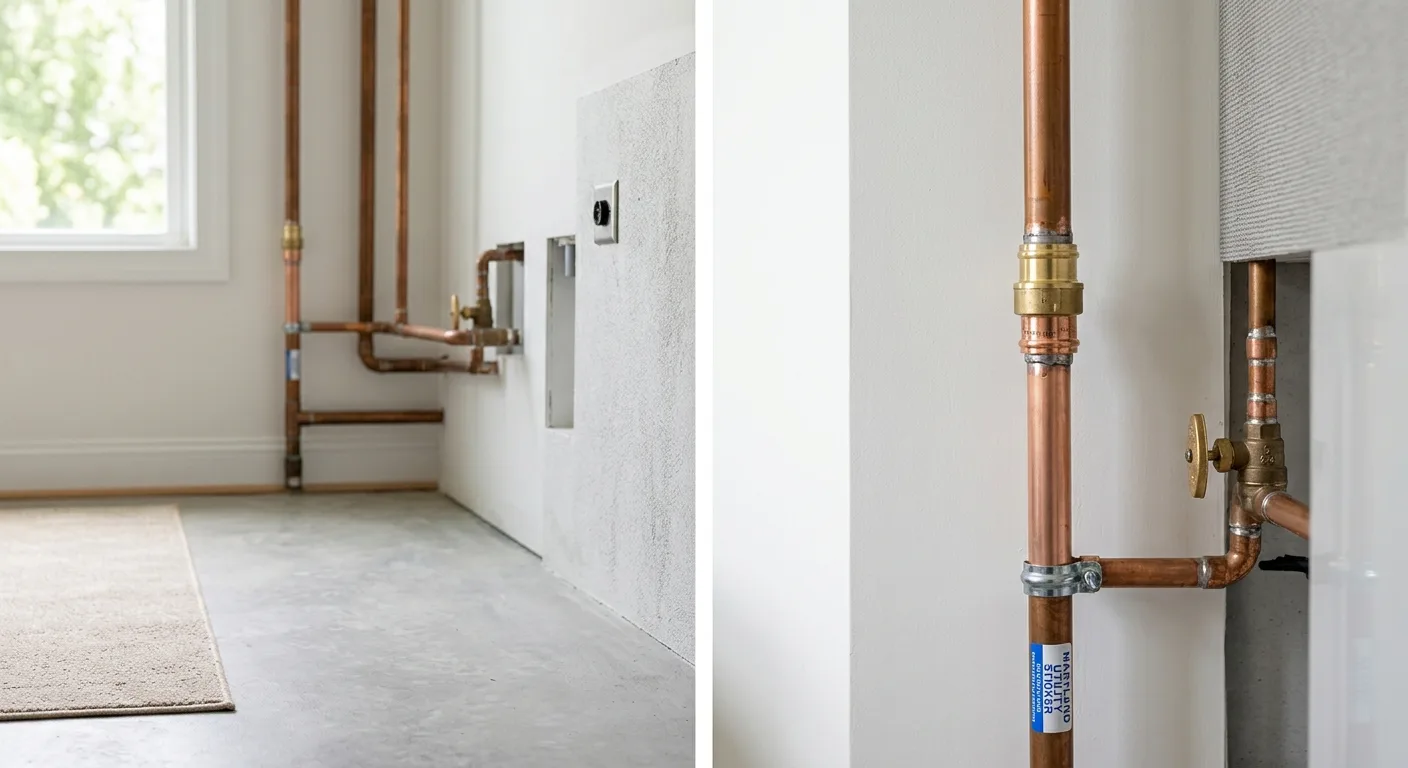
Corroded supply pipe that restricts water pressure in an older Gaithersburg home
Pressure Reducing Valve Replacement: When It's the Right Call
A pressure reducing valve replacement is the fix when the PRV is proven to be the cause, not when it's simply the most convenient part to swap. The PRV sits where WSSC water enters the house and steps the street pressure, which can run high on some Montgomery County lines, down to a safe 50 to 60 PSI for your fixtures. Over 8 to 12 years the internal seat and spring wear, and the valve either chokes pressure down too far or stops regulating and lets it climb.
We confirm the diagnosis by reading pressure before and after the valve with a gauge, which shows directly whether the PRV is the restriction. When it is, replacement is a contained job: isolate the supply, swap the valve, set the outlet pressure, and confirm the reading across the house. When the PRV tests fine, we keep looking rather than sell you a valve you didn't need. That diagnosis-first habit is how Chase runs every job. Ready to get it read? Call (301) 834-2944.
Plumber checking water supply line pressure in a Montgomery County home
When You Don't Need a Plumber Yet
Not every pressure complaint is a service call, and a straight answer here is worth more than a ticket. If only one fixture is weak and the rest of the house is fine, start there before you call anyone. A single slow faucet is almost always a clogged aerator, the little screen on the spout, or a sediment-blocked cartridge, and both are a ten-minute fix with a wrench and some vinegar. A single weak showerhead is usually just mineral scale in the head. Those are DIY jobs, not a reason to pay for a truck.
Here's the line. If it's whole-house, if it came on suddenly, if more than one fixture is weak, or if you've already cleaned the aerator and it's still poor, that's when the cause is upstream in your PRV, your pipe, your tank, or the supply, and that's when a gauge and a plumber earn their keep. Describe it at (301) 834-2944 and half the time we can tell you on the phone whether it's a vinegar-soak fix or a scheduled visit.
Free, no-pressure estimate
Weak Pressure You Can't Explain?
Tell the Holdsy Plumbing team what you're seeing at (301) 834-2944: whole-house or one fixture, sudden or gradual, city water or a well. Most of the time we can point at the likely cause on the phone and book a same-week visit. For non-urgent work, request a free estimate through the contact form.
My well pressure tank gives low or surging pressure. What's wrong?+
On a private well, weak or surging pressure is almost always the pressure tank or the pressure switch rather than the pump. The tank holds an air cushion so the pump isn't restarting every time you open a tap; when the bladder fails or the tank waterlogs, that cushion is gone and pressure sags and surges. We check the tank pre-charge and the switch setting first because they're the cheaper, more likely causes. Replacing a pump without checking the tank is how people end up doing the job twice. Details on the well pump repair page.
How do I fix low water pressure myself before calling?+
If only one fixture is weak, unscrew the aerator on the faucet spout or take down the showerhead and soak it in vinegar overnight to clear the mineral scale, then rinse and reinstall. That fixes most single-fixture complaints in a hard-water house. Next, confirm your main shutoff and the fixture shutoff are fully open, since a half-closed valve after other work is a common cause. If it's whole-house, if it came on suddenly, or if cleaning the aerator didn't help, the cause is upstream and it's time to call (301) 834-2944 so we can put a gauge on the line.
Only my hot water pressure is low. Why?+
When the cold side is fine and only the hot is weak, the problem is between the water heater and the tap, not the main supply. The usual causes are sediment and scale buildup inside an aging tank water heater, a partially closed shutoff on the heater's outlet, or scale in the hot-side lines. On a home with hard or well water, the tank fills with sediment faster and can choke hot-side flow. We check the heater shutoff and the tank condition rather than assume it's the whole plumbing system.
What's a normal water pressure for a house?+
Most residential plumbing runs comfortably between 40 and 60 PSI. Below about 40 you'll notice weak showers and slow fills; above about 80 you risk stressing fixtures and appliances, which is exactly what the pressure reducing valve is there to prevent on WSSC supply. We read your pressure with a gauge at the meter and at the far end of the house so we can see both the supply pressure and any drop happening inside your pipes.
How much does it cost to fix low water pressure?+
It depends entirely on the cause, which is why we diagnose before quoting. Reopening a partially closed shutoff can be a no-cost part of the visit. A pressure reducing valve replacement is a moderate, contained repair. A waterlogged well pressure tank is a mid-range part. Corroded galvanized pipe that has scaled shut is the large end, because the real fix is repiping the affected runs. We put a gauge on the line first so the number matches the actual problem, and we tell you what we found before any work starts.